
Understanding the Hidden Costs That Erode Your Profits
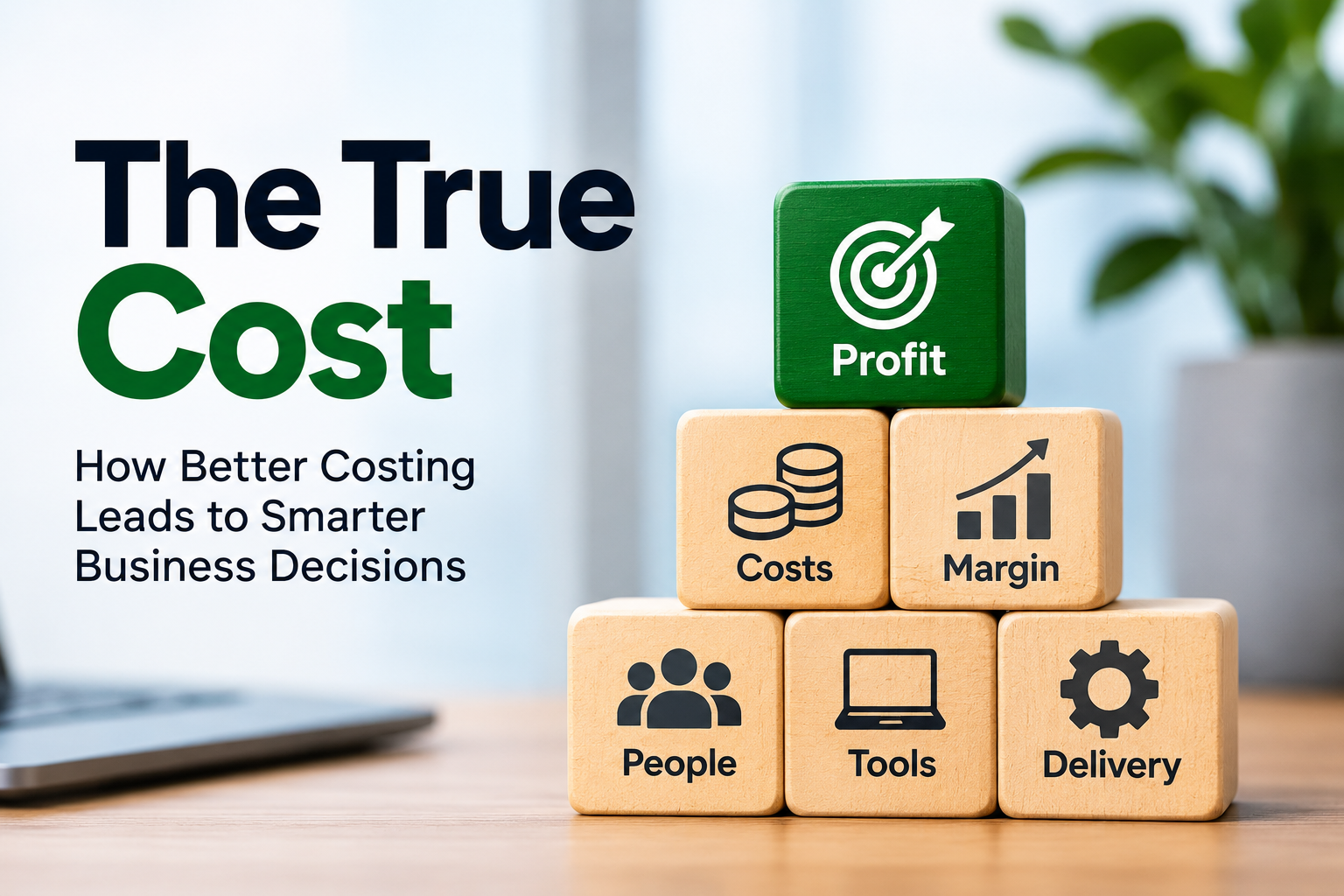
For creative agencies and technology businesses, one of the greatest threats to profitability is not necessarily a shortage of clients. It is the failure to understand the true cost of delivering services.
Many business owners know their revenue, overheads and bank balance. Far fewer understand which projects generate healthy margins and which quietly consume resources.
This is where management accounting becomes a strategic tool.
Understanding the True Cost of Delivery
Consider a creative agency charging £15,000 for a project.
The initial budget includes £5,000 in staff time and £2,000 in freelance costs, suggesting a healthy contribution of £8,000.
However, additional revisions, project management hours, software costs and unexpected client requests increase delivery costs to £12,000.
The project's contribution has fallen from £8,000 to £3,000 before accounting for other business overheads.
The agency has delivered the work, satisfied the client and generated revenue. Yet much of the expected financial return has disappeared.
The problem was not the sale. It was the failure to control the economics of delivery.
Costing Is More Than Recording Expenses
Management accounting principles distinguish between different types of costs to support better decisions.
Fixed costs remain relatively stable within a relevant operating range, such as office rent and certain software subscriptions.
Variable costs change with activity, including project specific freelance fees and certain production expenses.
Direct costs can be traced to a particular project, while indirect costs support the wider business.
Understanding these distinctions helps businesses calculate contribution, assess profitability and establish realistic pricing.
However, costs must also be relevant to the decision being made. A cost already incurred cannot be recovered simply by continuing an unprofitable project.
The Strategic Value of Better Costing
Effective costing enables business owners to answer important questions:
Are we charging enough for the resources required?
Which clients and services generate the strongest returns?
Should we outsource certain activities or develop internal capacity?
Would automation improve margins or simply increase expenditure?
Are we accepting work that consumes capacity better used elsewhere?
For agencies, the objective is not necessarily to reduce every cost. It is to allocate resources where they create the greatest commercial value.
This also supports sustainable business growth by reducing wasted resources, improving productivity and strengthening financial resilience, consistent with UN Sustainable Development Goal 8.
From Financial Information to Better Decisions
Management accounts should do more than report historical profit. They should help leaders understand project margins, staff capacity, cost behaviour and the financial consequences of their decisions.
At Highwoods Group, we believe profitable growth begins with financial visibility and disciplined decision making.
Before asking how to win more business, ask a more important question: Do we fully understand the cost of the business we already deliver?
Because getting the costing wrong can mean getting the entire growth strategy wrong.
Highwoods Group provides accounting, taxation and strategic business support to help businesses strengthen financial performance and plan for sustainable growth.
Explore our growth support services today at highwoodsgroup.co.uk.